
Winter in Alberta brings persistent snow, frequent freezing and thawing, changing temperatures, and surfaces that can quickly become hazardous. These repeated freeze-thaw cycles can create black ice, hidden slick spots, and sudden refreezing in high-traffic areas, which increases the risk of slip and fall incidents.
For commercial properties and organizations that open their doors to the public, these conditions introduce a level of risk that cannot be ignored. A single slip on untreated ice can result in injury, legal action, and financial strain.
MMI Insurance regularly works with property managers, business owners and administrators who are responsible for maintaining safe properties while managing limited time and resources. Understanding how liability works and where commercial property insurance fits in helps you make informed decisions before an incident occurs.
Let’s look at how responsibility is defined and at the steps that reduce exposure.
Understanding Legal Liability for Snow and Ice on Commercial Properties
What Is Legal Liability in Slip and Fall Cases?
Legal liability refers to your obligation to maintain reasonably safe conditions for people who enter your property. In a commercial setting, this duty applies to tenants, customers, visitors, contractors, employees, and anyone else using the space.
Courts in Canada assess whether you met a reasonable standard of care. That standard does not expect perfection. It focuses on whether a prudent property owner in a similar situation would have taken action to address known risks.
Negligence arises when that standard is not met. If snow or ice is left untreated in an area where people are expected to walk, and no action is taken within a reasonable timeframe, liability may follow. In slip and fall insurance claims, the injured party must demonstrate that a hazard existed, that it was known or should have been known, and that appropriate steps were not taken.
How Courts Determine “Reasonable Care” After Snowfall
Reasonable care is evaluated in context. Courts consider the timing of snowfall, the duration of accumulation, and the actions taken once conditions stabilize.
During active snowfall, expectations are more flexible. Continuous accumulation makes it difficult to maintain clear surfaces at all times. Once snowfall ends, however, the expectation changes. Business and property owners are expected to begin clearing and treating surfaces within a timeframe that reflects the level of risk.
Other factors influence what is considered reasonable. High-traffic properties require more frequent attention, and weather patterns such as freeze and thaw cycles increase the need for monitoring.
Duty of Care by Property Area (Entrances, Parking Lots, Walkways)
Different areas of a property carry different levels of responsibility. Entrances and primary walkways present the highest risk due to constant use. These areas should be cleared and treated first, especially before scheduled gatherings.
Parking lots still require attention, but the standard may allow for staged clearing depending on size and usage. Secondary walkways and less frequently used areas can be addressed after priority zones are made safe.
A practical approach is to identify critical access points in advance and focus efforts there during active weather events. This shows a clear and organized response if conditions are later reviewed in a claim.
Owner vs Tenant vs Contractor: How Liability Is Shared
Responsibility for snow removal is often outlined in lease agreements or service contracts. Under Alberta’s Occupiers’ Liability Act, the party in control of the property, referred to as the occupier, has a legal duty to ensure the premises are reasonably safe for visitors. This duty can apply to owners, tenants, or both, depending on who has control over the space.
Even when duties are assigned to tenants or third-party contractors, that legal responsibility is not automatically transferred. If a contractor fails to perform as agreed, or if hazards are left unaddressed, multiple parties may be named in a claim. Indemnity clauses can help define responsibility, but they do not eliminate the occupier’s obligation to take reasonable care.
For owners that lease space or share facilities, it is important to clearly document who controls each area of the property and who is responsible for maintenance. Ongoing oversight is essential to confirm that those responsibilities are being carried out in practice.
The Role of Inspection Logs and Maintenance Records in Claims
When a claim arises, documentation often becomes the deciding factor. Records provide evidence that reasonable care was taken and that conditions were monitored.
A strong log should include:
- Inspection times
- Weather conditions at the time of inspection
- Actions taken, such as clearing, salting, or sanding
Regular inspections are particularly important during temperature swings. Ice can form quickly after melting, and conditions can change within hours.
How Commercial Property Insurance Helps Protect Your Business
Commercial property insurance supports your business when unexpected events occur. While it is commonly associated with damage to buildings and contents, it works alongside liability insurance in Canada to address third-party injury claims.
Slip and fall insurance is typically included within a broader liability framework. This coverage can help manage legal defence costs, settlements, and awarded damages if your organization is found responsible.
Risk Management Tips to Reduce Snow and Ice Liability
Alberta’s weather can create snow and ice hazards that shift quickly from one region to another. In Calgary and southern Alberta, Chinook winds can melt snow fast, then leave surfaces slick when temperatures drop again.
For business owners and property managers around Edmonton and central Alberta, longer cold snaps often lead to packed snow and stubborn ice buildup. Drifting snow and reduced visibility can make parking lots, entrances, and walkways harder to manage safely regardless of your location.
That’s why a once-a-day clearing routine often isn’t enough. Property owners and managers should pay close attention to sloped surfaces, shaded walkways, roof runoff areas, and other spots where meltwater can refreeze.
Extra inspections during temperature swings, timely de-icing, better drainage, and clear hazard signage can go a long way in reducing risk. Just as important, keep records of weather conditions, inspections, and maintenance work to show that hazards were addressed promptly.
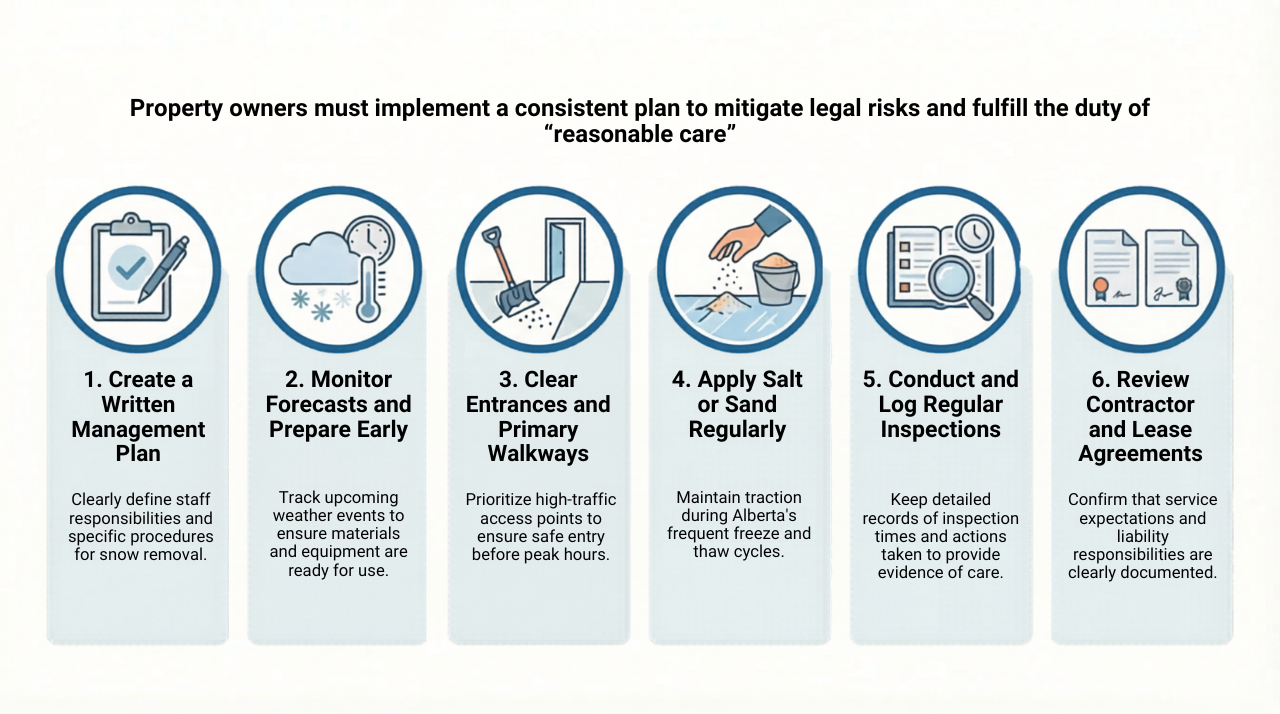
Reducing exposure requires consistency and planning. The following steps support a proactive approach:
- Create a written snow and ice management plan with assigned responsibilities
- Monitor forecasts and prepare materials before major weather events
- Clear and treat entrances and primary walkways before peak use times
- Apply salt or sand during freeze and thaw cycles to maintain traction
- Conduct regular inspections and record all actions taken
- Review contractor agreements and confirm service expectations are met
These practices, combined with proper coverage, help reduce the likelihood of incidents and strengthen your position if a claim arises.
Why Commercial Property Insurance Matters for Snow and Ice Liability
Operating in Alberta means dealing with winter conditions every year. The risks associated with snow and ice can lead to injuries, legal action, and unexpected costs. Commercial property insurance provides a foundation for managing these risks and maintaining stability.
With the right policy in place, supported by liability protection and informed risk management, your organization can continue serving your community with confidence. Our team at MMI Insurance works with business owners across Alberta to ensure coverage reflects real operational needs.
In winter, the risks associated with snow and ice can expose businesses to serious legal and financial consequences. Having the right coverage in place is essential.
If you’re interested in learning more about how commercial property insurance can help protect your business, reach out to MMI Insurance today at 866-222-6996 or click here to get in touch online.
FAQ: Snow and Ice Liability for Commercial Properties
What is considered negligence in snow and ice cases?
Failing to take reasonable steps to remove or treat hazards.
Can a business be liable even if a contractor handles snow removal?
Yes, responsibility may still be shared depending on the situation.
How quickly must snow and ice be removed?
Within a reasonable timeframe after accumulation ends.
Does commercial property insurance cover slip and fall claims?
Often yes, especially when paired with liability coverage.
What records should businesses keep during winter?
Maintenance logs, inspection reports, and service contracts.